
Walls or Bridges: Word Made Flesh at the 4th Annual Lausanne Congress By Ariel Alexander and David Chronic
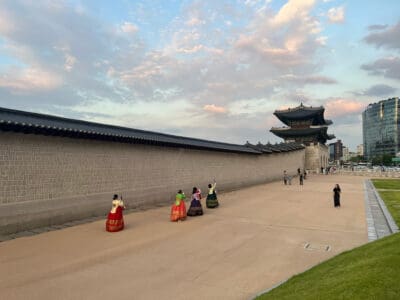
 The landscape of Seoul, South Korea, is marked by striking contrasts: ancient palace walls that once protected royalty stand amid ultra-modern bridges connecting the sprawling metropolis. These architectural features became fitting metaphors for our experience at the 4th Lausanne Congress, held from September 22-28, 2024. As representatives of Word Made Flesh, an organization dedicated to serving among the world’s most vulnerable, we witnessed both bridge-building moments of unity and the erection of walls that divided.
THE CONGRESS IN CONTEXT
The Lausanne movement, initiated by Billy Graham and John Stott in 1974, has historically served as a gathering point for global evangelicals to discuss and shape mission strategy. The first Congress notably expanded the traditional North Atlantic vision of mission as purely proclamation, thanks to Latin American delegates like René Padilla and Samuel Escobar, who successfully advocated for including social
Throughout its history, the Lausanne congresses have gathered evangelicals around the common task of global mission and have been occasions for debate. Leaders and delegates have had to decide where to build walls that delineate identity, beliefs, and strategies but that also divide and exclude. Lausanne participants have also had to negotiate where to build bridges that hold together different views but may broaden identity.
This past year’s Congress brought together over 5,300 delegates from more than 200 countries, with an additional 2,000 participating virtually. The theme, “Let the Church Declare and Display Christ Together,” aimed to address what Lausanne termed the “25 gaps” in fulfilling the Great Commission by 2050 through global collaboration. We do not want to understate the many strengths of the Lausanne movement, not least of which is its ability to bring diverse evangelicals together and its desire to address current challenges to the Great Commission. That said, it also has shortcomings, which, due to our adherence to the Lausanne Covenant, need to be named.
THE SEOUL STATEMENT
One of the most concerning aspects of the Congress was the handling of the Seoul Statement, both in process and content. Unlike the collaborative process behind the Cape Town Commitment in 2010, delegates received the Seoul Statement as a fait accompli upon arrival, with no opportunity for input or revision. This top-down approach contradicted the Congress’s rhetoric about collaboration and partnership. The content of the Statement itself drew significant criticism from theological networks and country delegations.
As noted by scholar Vinoth Ramachandra, it reads more like “a long document intended for a church Sunday School class” than a serious missiological framework. The Statement’s treatment of holistic mission was particularly problematic, seeming to diminish the integral connection between proclamation and social action that had been a hallmark of Lausanne since 1974.
THE GENTRIFICATION OF MISSION
A deeper issue emerging from the Congress was the evident gentrification of evangelical Christianity and mission. The emphasis on technological solutions, digital strategies, and management approaches to mission reflected a middle-class, professionalized vision of Christianity that often distances itself from the poor and marginalized. This was visible in everything from the Congress’s “V.I.P.” tables to its failure to substantively address systemic issues like predatory economic systems, increasing autocracies, military complexes, war, or wealth disparity as impediments to mission. The Congress’s approach to mission often prioritized efficiency and measurable outcomes over the messy, long-term work of incarnational presence among the poor. The prioritization of efficiency was also highlighted by the emphasis on technology, with an entire hall dedicated to technological innovations for evangelism. While these tools offer new opportunities for ministry, the focus on digital solutions often came without sufficient theological and missiological reflection on their implications for users, ecology, and power dynamics. This gentrified version of mission risks losing touch with the radical call of Christ to be present with those on the margins of society. STRUCTURAL TENSIONS While Lausanne’s ability to convene such a diverse gathering is commendable, several structural issues emerged that reflect deeper tensions within the movement.
The Congress’s approach to collaboration revealed a concerning tendency toward top-down management rather than genuine partnership. Lausanne’s self-positioning as THE evangelical platform for mission, rather than one among many “polycenters of mission,” reflected an assumption of power that impedes true collaboration. This was further demonstrated by the Congress’s representation which, while diverse on paper, showed significant gaps. Women comprised only 29% of delegates despite being the majority of the global church, and just 16% were under 40 years old (Lee, Morgan. Christianity Today, September 24, 2024).
COMPETING NARRATIVES FOR MISSION
A critical moment at the Congress highlighted the ongoing tension between different visions of mission. When Ruth Padilla DeBorst spoke about justice and challenged certain theological positions that can enable oppression, she was asked to issue a public apology – which she declined to do. The Congress leadership’s subsequent apology to delegates for not reviewing her speech beforehand revealed deep-seated issues about whose voices are welcomed and which perspectives are deemed acceptable within evangelical orthodoxy.
As an organization rooted in serving among the poor, we found ourselves in the minority among delegates. While the Congress’s formal theme spoke of both “declaring and displaying” Christ, the dominant emphasis remained on proclamation, with justice and social engagement often relegated to “special interest” status. This represents a concerning drift from the holistic vision of mission that was hard-won at (FIX)
 LOOKING FORWARD: WALLS OR BRIDGES
As Word Made Flesh, we recognize our place within a broader tradition of contextual theology that seeks to serve the most vulnerable. This tradition encompasses not only historical figures like Saint Francis and Bartolomé de las Casas but also modern manifestations such as the integral mission movement in Latin America and various liberation theologies worldwide. Our experience at Lausanne reinforced the importance of this heritage while highlighting the ongoing need for these perspectives in wider theological conversations about mission.
The Congress left us with both hope and concern. While Lausanne continues to bring together diverse voices from the global church, its tendency to build walls rather than bridges threatens to undermine its potential as a platform for genuine dialogue and collaboration. In a world marked by increasing polarization, the church desperately needs spaces where different perspectives can come together in authentic exchange, united by our shared commitment to Christ.
Moving forward, we hope for a greater prioritization of voices from the Majority World and a deeper recognition that God’s transformative work extends beyond strategic goals and metrics. True mission, as we understand it, requires both proclamation and presence, both speaking and serving, both justice and evangelism.
It calls us to build bridges rather than walls, even—especially—when crossing those bridges makes us uncomfortable.
Jesus prayed that his followers would be known by their love for one another (John 17). May this prayer guide future conversations about making Christ known among the nations, and may we have the courage to cross the bridges that lead to genuine understanding and collaboration in mission.
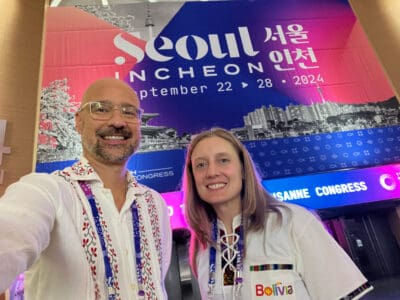 About the Authors – Ariel Alexander, Regional Coordinator for Latin America
Ariel grew up in Córdoba, Argentina, and has called La Paz, Bolivia home since 2009. She joined Word Made Flesh in 2012 and has supported survivors of abuse and sexual exploitation as program coordinator, researcher, advocate, and inter-cultural formation facilitator within the WMF community in Bolivia. At the beginning of 2023 she stepped into the role of Regional Coordinator for Latin America. She desires to support WMF communities in Latin America and create bridges of partnership between individuals and organizations serving those in vulnerable situations in the region.
David Chronic, Director of Operations
David Chronic began his role as Director of Operations on September 1, 2018. Serving in Romania with Word Made Flesh since 1998, David felt a calling to cross-cultural mission and to serve the poor during his senior year of high school. He studied international relations at the University of Nebraska at Omaha, receiving a scholarship to study in Romania and Moldova. There, he developed relationships with street children and those in state institutions, leading to his continued service in Romania.
Together with his wife Lenuta, David works among vulnerable youth and poor families, providing education, counseling, and mentoring through Day Centers and Community Centers. He also organizes short-term teams and internships, fostering discipleship and development in a missional context.